
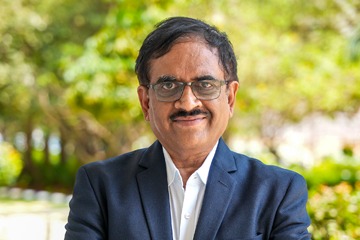
Mr Satyanarayana Duvvuri, Associate Director – Directorate of Executive Education and Professional Studies & Professor of Practice, Department of Management, SRM University AP
There is a well-known story about Naseeruddin Mulla.
One evening, Mulla was searching for a lost key under a streetlamp. Passersby noticed his struggle and joined him in the search. After a long and unsuccessful effort, one of them asked:
“Mulla, where exactly did you lose the key?”
“Near my house,” he replied.
Perplexed, they asked, “Then why are you searching here under the lamp?”
Mulla answered, “Because there is more light here.”
The story is amusing, but it exposes a leadership blind spot that is surprisingly common.
Many leaders search for answers where visibility is high, not where value exists. When faced with a challenge, they immediately turn to celebrated experts, renowned institutions, or distant business hubs. They assume that the best ideas must come from outside.
In reality, the most valuable insights are often much closer.
The employees who interact with customers daily, the managers who understand local markets, and the teams who live with operational realities frequently possess solutions that no external consultant can provide. Yet these voices remain unheard because leaders do not invest enough in trust, empowerment, and dialogue.
The same pattern appears in business development.
Organizations often deploy disproportionate amounts of time, capital, and leadership attention toward visible markets while overlooking profitable opportunities hidden within their existing ecosystems.
While those markets are important, leaders sometimes overlook the untapped potential in nearby towns, regional clusters, and existing customer ecosystems.
Everyone is looking under the streetlamp because that is where everyone else is looking.
Great leaders do the opposite.
They search where the opportunity actually exists. They uncover hidden talent within their organizations. They discover underserved markets close to home. They create competitive advantage not by following the crowd, but by seeing what others fail to notice.
Leadership is not about chasing the brightest spotlight. It is about having the wisdom to look where the real value lies.
The Leadership Cost of Looking Under the Lamp
The danger of the ‘streetlamp mindset’ is not merely missed opportunities. It is the gradual weakening of organizational confidence.
When leaders consistently look outside for answers, employees begin to believe that expertise resides elsewhere. Innovation slows. Initiative declines. Local markets remain unexplored. Teams become executors rather than contributors.
Conversely, when leaders actively seek ideas from frontline employees, regional markets, channel partners, and existing customers, they send a powerful message:‘The next breakthrough can come from any corner of the organization.’
That belief often becomes a source of competitive advantage that competitors cannot easily replicate.
Before Looking Outside, Ask These Three Questions
- Have we fully tapped the knowledge within our teams?
- Have we explored growth opportunities within our existing customer ecosystem?
- Are we chasing visibility or pursuing genuine value?
A leader who answers these questions honestly will often discover that the next opportunity is much closer than it appears.
Takeaway
Average leaders search where the light is. Exceptional leaders search where the key was lost.
In an age obsessed with scale, great leaders do not neglect proximity. They understand that sustainable growth often begins by seeing what others overlook. Before searching under the brightest lamp, they first examine their own backyard.
The future belongs not to leaders who search the farthest, but to those who see the deepest.
Leadership begins not with seeing farther than others, but with seeing more deeply than others. The next key to growth may not be hidden in distant markets or famous institutions. It may be waiting quietly within your people, your customers, and your own backyard.